Most packaging is thrown away within minutes of being opened. Tin packaging is different.
A well-designed tin often stays in kitchens, offices, and homes for years. It gets reused, repurposed, and recycled instead of immediately ending up in landfill. That’s exactly why tins continue to play an important role in the circular economy.
As more consumers pay attention to sustainability and packaging waste, brands are being pushed to think beyond single-use materials. Packaging now needs to do more than simply protect a product - it needs to last longer, create less waste, and provide real value after purchase.
What Does “Circular Economy” Actually Mean?
The circular economy is built around one simple idea: keeping materials in use for as long as possible.
Instead of the traditional cycle of:
Circular systems focus on:
- Reuse
- Recycling
- Refill models
- Long-lasting materials
Tin packaging fits naturally into this approach because consumers rarely see tins as disposable.
Why Consumers Keep Tins
Think about how many tins people keep at home.
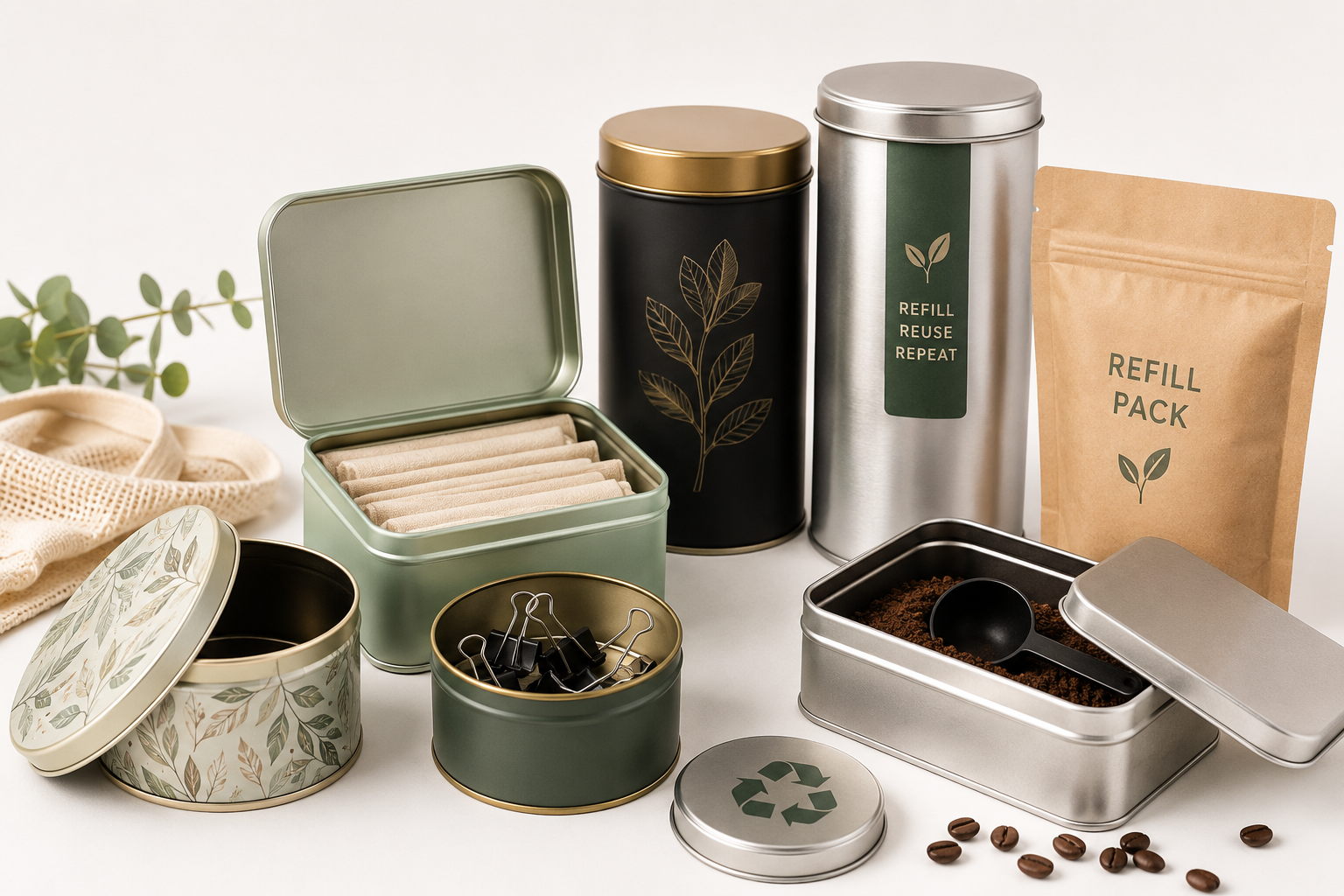
Biscuit tins become storage containers. Coffee tins sit on kitchen counters for years. Decorative tins are reused for crafts, stationery, keepsakes, and household organisation.
That continued use matters. Unlike disposable packaging that disappears immediately after purchase, tins continue giving brands visibility long after the original product is gone.
For consumers, reuse feels practical. For brands, it creates longer-lasting engagement.
Refill Systems Are Growing
Reusable packaging is becoming increasingly common across:
- Coffee subscriptions
- Tea brands
- Wellness products
- Beauty and skincare ranges
- Household goods
Many brands are now combining durable tins with refill sachets or pouches. The customer keeps the tin, while lighter refill packs reduce packaging waste and shipping weight.
It’s a simple system, but an effective one. Consumers still get a premium experience, while brands reduce unnecessary material use.
Tin Packaging and Recycling
Tin and steel packaging are also highly recyclable. Unlike some materials that lose quality during recycling, metal can be recycled repeatedly without compromising strength or durability. That makes tins particularly valuable in long-term packaging systems.
According to the International Tin Association and European recycling data, metal packaging continues to achieve some of the highest recycling rates globally.
Sustainability Without Sacrificing Presentation
One challenge brands often face is balancing sustainability with shelf appeal. Consumers still want packaging that feels premium, especially in food, beverage, gifting, and cosmetics markets. Tin packaging manages to achieve both.
Tins offer:
- Durability
- Reusability
- Strong shelf impact
- Premium finishes
- Long-term brand visibility
That combination is difficult to achieve with single-use packaging alone.
FAQ: Tin Packaging and Sustainability
Are tins environmentally friendly?
- Tin and steel packaging are highly recyclable and frequently reused by consumers before entering the recycling stream.
Why do consumers keep tins?
- Tins are durable, practical, and often visually appealing, making them useful for storage and organisation long after purchase.
Can tins work with refill systems?
- Yes. Many brands now use tins as permanent containers paired with refill sachets or pouches.
Are reusable packaging systems becoming more popular?
- Absolutely. Refill and reuse systems are growing across coffee, tea, beauty, wellness, and household product categories.
Conclusion
Consumers are becoming more aware of the packaging they bring into their homes.
Packaging that lasts longer, creates less waste, and continues serving a purpose after purchase is becoming increasingly valuable. Tin packaging supports that shift naturally through reuse, refill compatibility, and recyclability.
In many cases, the packaging becomes just as useful as the product itself.
Looking to create more sustainable packaging solutions for your products?
Contact Tinpac to explore custom tin packaging designed for long-term reuse and refill systems:
www.tinpac.com/contact
References
International Tin Association: “Tin Recycling and Sustainability” | https://www.internationaltin.org/recycling/
WRAP UK: “Refill and Reuse Systems for Packaging” | https://wrap.org.uk/resources/report/refill-and-reuse-towards-circular-economy-packaging
European Commission: “Circular Economy Action Plan” | https://environment.ec.europa.eu/strategy/circular-economy-action-plan_en
Ellen MacArthur Foundation: “Reuse – Rethinking Packaging” | https://ellenmacarthurfoundation.org/reuse
Packaging Europe: “The Growth of Circular Packaging Systems” | https://packagingeurope.com


.png)
.png)


